In two months of operation, Loupit's cashback lifted travel policy adoption by 37% and cut the average fare by 8%. The perk became a compliance and retention lever for HR.
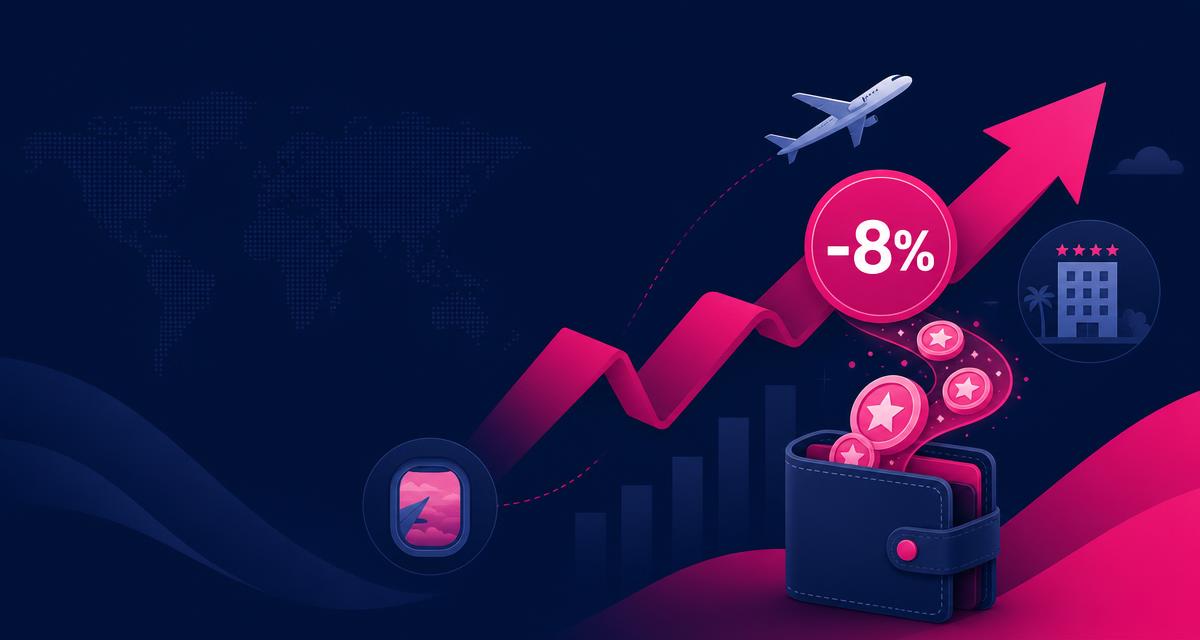
In just two months of operation, Loupit's cashback program drove a 37% increase in corporate travel policy adoption and an 8% drop in the average booking fare at the companies that adopted the model. The figures, for the period starting in June 2025, are Loupit's own operating results and point to a single driver: traveler engagement with the company's internal rules. This is the kind of metric that now interests HR departments at midsize and large companies, for whom cashback has stopped being an accessory perk and become an instrument of behavioral compliance and talent retention.
Why corporate cashback pulls the average fare down
The short answer: because it moves the booking into the official channel and inside the policy. When the traveler books through the approved platform, the company again compares fares, enforces minimum advance purchase and locks authorized categories. The 8% drop in average fare did not come from a new supplier negotiation, it came from behavior.
Context helps explain how fast the result showed up. The Global Business Travel Association projects US$ 1.57 trillion in global corporate travel spend for 2025, growing around 7% for the year, and the industry still faces a persistent policy-adoption problem. Skift's study with Navan (State of Corporate Travel 2025) finds that more than 60% of managers still process travel expenses manually, while 77% say they need unified travel and expense platforms. Low use of official channels exposes the lack of mechanisms that actively encourage compliance.
The two sides of the financial model
- For the employee: every eligible booking generates credits that accumulate and can be used on future hotel stays, with visible balance and expiry.
- For the company: the mechanism drives bookings into the official platform, reduces purchases outside approved channels and converts part of hotel spend into future savings, without adding management complexity.
Flexibility in allocating the value, to the traveler, to the company or in a hybrid split, makes the program adaptable to different policies. The rules are detailed on the corporate travel cashback page.
Double cashback for travelers who follow the policy
Loupit runs its own behavioral incentive: it credits double cashback to travelers who fully respect the company travel policy. On in-policy hotel bookings the traveler earns 2% cashback; out of policy, 1%. The calculation uses the nightly rate, excluding taxes and fees, and credits can be spent on personal trips, which stay private.
By tying the reward to compliance with internal rules (use of the official channel, advance booking, authorized categories and any other criteria the organization defines), the financial benefit becomes a direct management tool. The traveler is no longer chased to follow the policy and is instead recognized for following it. That inversion explains much of the 37-point jump in adoption seen in the first two months. Rules and approval flows can be designed in governance and travel policy, supported by ready-to-use policy templates.
"Cashback stopped being perceived as a giveaway and started being treated as a management tool. When the employee sees the return on their own booking, and knows that return doubles when they follow the company travel policy, adoption no longer depends on enforcement and starts happening out of genuine interest. In two months we saw adoption rise 37% and the average fare fall 8%, and none of that came from a new supplier negotiation: it came from a change in traveler behavior," says Patrick Tytgadt, CEO of Loupit.
Impact model: what 2% means at scale
The table below is an illustrative calculation model, not a promise of results. Actual return depends on travel volume, platform adoption rate and each program's specific rules.
| Eligible hotel bookings | In-policy cashback (2%) | Out-of-policy cashback (1%) |
|---|---|---|
| US$ 250k | US$ 5k | US$ 2.5k |
| US$ 1M | US$ 20k | US$ 10k |
| US$ 5M | US$ 100k | US$ 50k |
For every US$ 1 million in eligible bookings, 2% cashback generates US$ 20 thousand in credits that return to the corporate ecosystem, split between employee and company according to each organization's policy. On top of that come relevant indirect gains: recovering spend that used to happen outside the official channel, stronger negotiating power with suppliers, consolidated invoicing and less administrative rework. To size the effect on your operation, run the savings calculator and cross-check the result with spend reports and analytics.
Why the topic reached the HR agenda
Cashback's impact goes beyond cost reduction. Deloitte research shows 74% of travel managers expect budget increases in 2025, a scenario that pressures people teams to evidence the return on mobility spend. By turning corporate trips into perceived value, cashback works as recognition for those who follow the policy, reinforcing attraction and retention without creating new budget lines.
Reports from global players such as American Express Business Travel and SAP Concur back the trend: reward programs integrated into travel and expense platforms help lift internal policy adoption and improve traveler experience. Along the same lines, Amex GBT analyses highlight direct financial benefits to the employee as a relevant retention factor in travel programs. The Euromonitor projection, in collaboration with Navan, estimating the global corporate travel market at US$ 2.9 trillion by 2029, suggests intensifying demand for solutions that connect operational compliance to the retention agenda.
Where cashback fits in the operation
Cashback does not operate in isolation. It is the incentive layer on top of a booking base that already compares fares from several approved agencies in real time and applies the policy inside the tool itself. To understand the mechanics, see the live comparison, the difference between a single agency and a marketplace and the online travel rebooking flow, which compares rebooking against buying a new ticket. After the trip, expense with AI receipt reading closes the compliance loop.
Frequently asked questions
What is cashback in corporate travel?
It is the return of a percentage of the booking value as credit. At Loupit, in-policy hotel bookings generate 2% cashback and out-of-policy bookings 1%, always calculated on the nightly rate, excluding taxes and fees.
How did cashback cut the average fare by 8%?
By rewarding bookings made in the official channel and inside the policy, the program brought purchases that used to happen off-platform back onto it. That restored fare comparison across agencies, minimum advance purchase and authorized categories. In the first two months of Loupit's program, started in June 2025, policy adoption rose 37% and the average fare fell 8%.
Does the cashback belong to the traveler or the company?
It depends on the policy. The value can go to the traveler, to the company or be split between both. When it goes to the traveler, credits can be used on personal trips, which stay private.
Is corporate cashback a benefit or a compliance tool?
It starts as a benefit but works as behavioral compliance. By doubling the reward for travelers who fully comply with the policy, the company recognizes the desired behavior instead of merely enforcing it.
How much can a company generate in credits?
As a reference model, every US$ 1 million in eligible in-policy hotel bookings generates US$ 20 thousand in credits. It is an illustrative calculation: real results vary with travel volume, platform adoption and program rules.
Does cashback replace supplier negotiation?
No. It acts on purchasing behavior, not on the negotiated rate. The two effects add up: an enforced policy with fare comparison plus commercial agreements.
Next step
Estimate the effect of cashback and policy on your operation in a few minutes: use the savings calculator and, when you want to see the platform from the inside, complete the free signup.