Competition between agencies stops happening every two years and starts happening on every quote. By Patrick Tytgadt.
By Patrick Tytgadt, travel tech specialist
Corporate travel distribution was designed for a world that no longer exists — one where fare information was scarce and comparing prices required human effort. In that world it made sense to pick one agency every two or three years, negotiate the transaction fee and route everything through a single channel.
The world changed. The buying model did not.
What today's model actually compares
In a traditional RFP, companies compare agencies mostly on one line: the fee. It is the most visible and easiest item to tabulate. It also represents roughly 1% of a trip's cost. The other 99% — airfare, hotel, car rental — never enters the comparison, because at RFP time those prices do not exist yet.
The small item is negotiated hard. The large one is accepted without competition.
What a marketplace changes
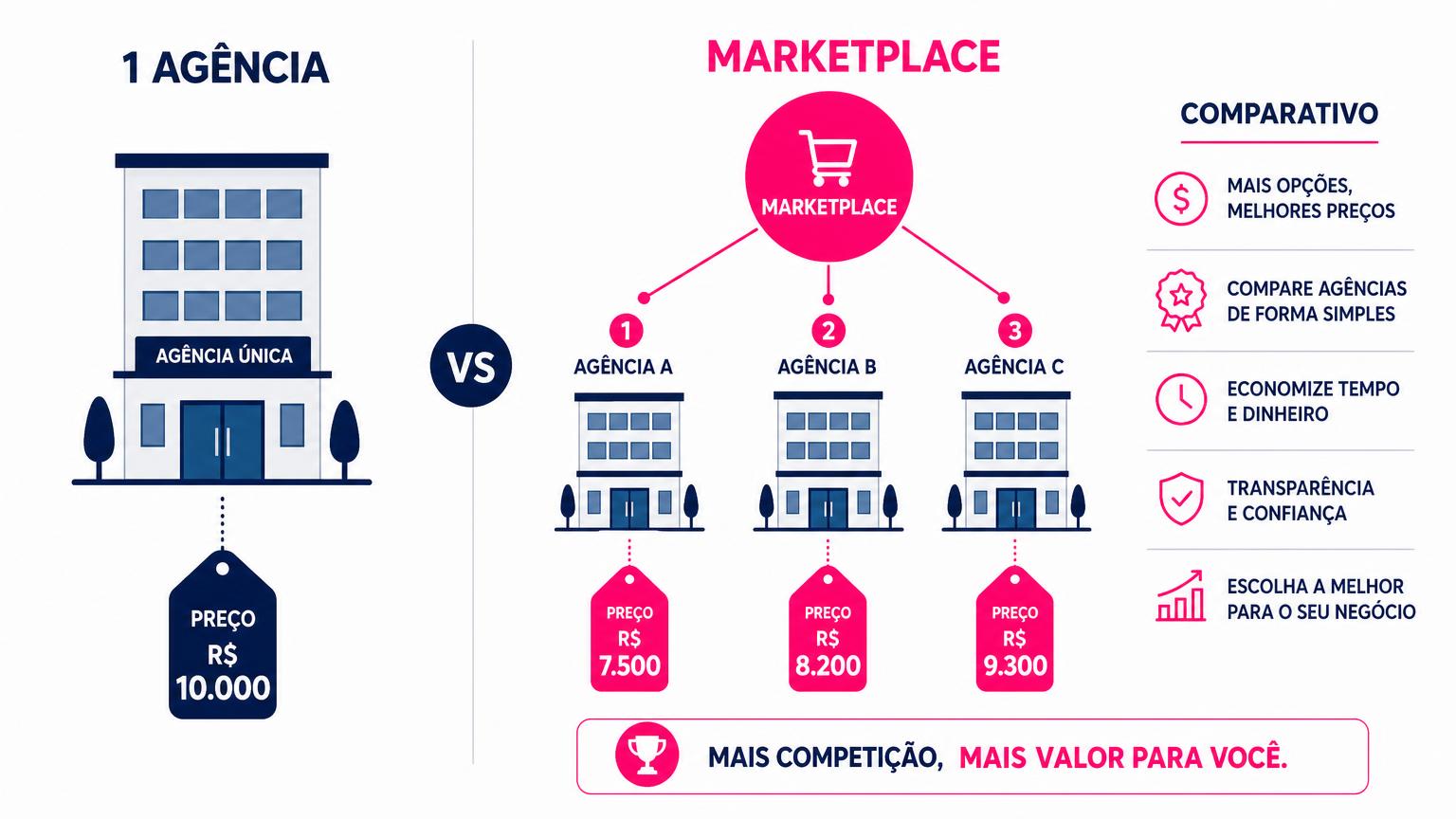
In a marketplace, competition happens on every travel request instead of once every two years. Several approved agencies answer the same search, and the company sees final price including fee, fare rules, baggage, change policy and availability side by side.
- Comparison covers 100% of the cost, not 1%.
- Every decision is recorded, with what was available at that moment, so savings become auditable rather than estimated.
- Travel policy runs inside the purchase, ranking eligible options before the traveler chooses.
Why this is not the end of the agency
It is the end of the single channel, not of the agency. Agencies still handle service, supplier negotiation, overnight rebooking and traveler care. What they lose is a contractual guarantee of exclusivity — which rewards the good agency, chosen on the result it delivers in each quote.
The structural signal
Model shifts show up in processes before they show up in speeches. Companies are already putting two or three agencies on the same request, requiring a recorded comparison and measuring savings per transaction instead of per contract.
Buying corporate travel without comparing on every quote will soon look as odd as contracting freight without asking for three prices.
FAQ
Does a corporate travel marketplace replace the TMC?
No. It changes when competition happens. Agencies remain responsible for service, advice and negotiation.
How does procurement prove savings?
Through the record of each quote: compared final price, chosen option and available alternatives.
Does it work with a strict travel policy?
Yes. Policy is applied before options are shown, reducing exceptions and out-of-channel bookings.
---
Patrick Tytgadt is a travel tech specialist, founder and CEO of Loupit. Studies at [/estudos/patrick-tytgadt](/estudos/patrick-tytgadt).